

The Sales Lesson Overview:
We're going to run through an example of expectation vs. engagement in regards to potential customers or existing customers. This lesson focuses on internal customers (employees), and a real life example of stumbling on seeing the big picture regarding a simple task of a vending machine in the employee break room.
The Real Life Example:
A company that will go without naming, that I previously worked for, always dealt with internal complaints from it's employees regarding the choices of food products which were available for sale in the employee break room. This company, caring about the opinions of their employees, went through great lengths to ensure they were satisfying their internal customers.
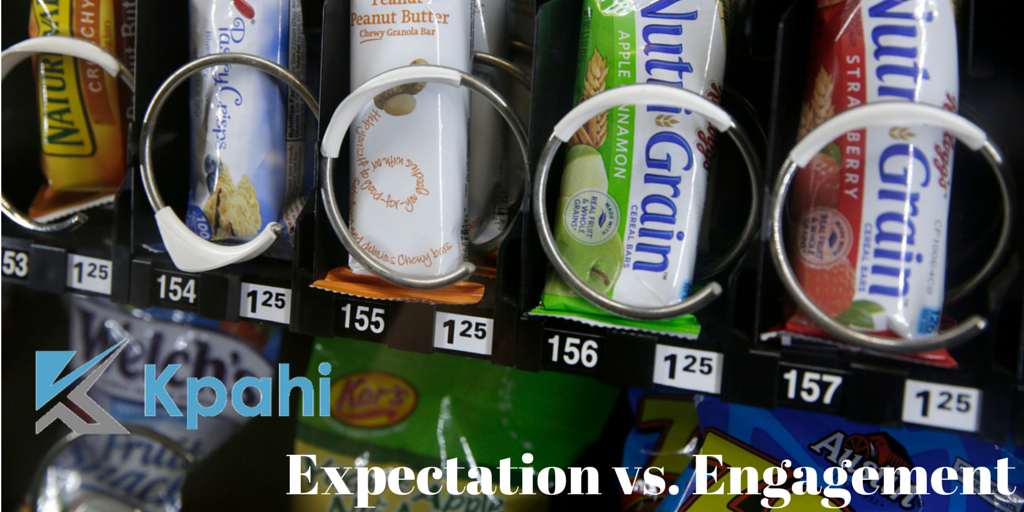
The proposed conclusion by the company leadership team seemed simple and grand. They polled their employees as to their specific food likings and provided a majority of those products in their vending machine. Additionally, wanting to appeal to the masses, they adjusted the pricing of the items to the highest priced item per piece, roughly $1.25 for all products in the machine.
Need a pack of gum? $1.25
Want a Snicker's bar? 1.25
Whatever your liking, it is just that simple...$1.25.
Was this plan successful in engaging their internal customers? Absolutely not! The sales within the vending machine flattened out to nearly zero, and they were forced to discard expired product that hadn't sold.
We would assume that the normally higher priced items would have sold out, as they were nutritionally enriched products that employees had specifically asked for. Here is where they went wrong.
- They lumped all of their employees into the same basket.
- They assumed by asking the same price for all of the products that expectations were being met.
- The company felt they were engaging their customer completely by meeting their brand expectations.
Download our Free Guide: http://resources.kpahi.com/30-lead-generation-best-practices

By pricing a pack of gum at the same price as a nutritional snack, they failed to fulfill and engage their customers (employees) successfully. Though their intentions were grand, in the end their expectations didn't meet the customer's expectations, thus resulting in overall failure.
Moral of the Story:
Understanding your prospects expectations will greatly increase your opportunity to create successful engagement. Whether it be a marketing campaign or the entirety of a project, truly engaging a customer's needs will result in success on multiple fronts. A happy customer makes for a pipeline of referral's.
Don't forget to subscribe to our blog to enjoy further examples of how to succeed in marketing.